

Network Management & Steering Group

Johanna R von Holdt, (PhD)
Director+27 21 650 2244
Senior Lecturer and Deputy HOD
Department of Environmental and Geographical Sciences
University of Cape Town
Johanna R von Holdt, (PhD)
Dr Johanna von Holdt is a Senior Lecturer and HOD at the Department of Environmental and Geographical Sciences, University of Cape Town. She is a previous UCT postdoctoral research fellow specialising in various aspects of mine dust. As the UCT mine dust networking group co-ordinator, Dr von Holdt is perfectly placed to coordinate the GCRF Mine Dust and Health Network activities, play an active role in Network discussions and activities, and to subsequently help to implement research directives that result from the Network.
Her research career developed during her time at the Texas Transportation Institute (TTI) at Texas A&M University and at the Council for Scientific and Industrial Research (CSIR) in Pretoria where she was involved in several research studies on soils and materials for road construction. She also wrote and implemented the ISO17025 quality system in the Built Environment lab at the CSIR. Johanna built on her research experience by pursuing her postgraduate studies at the University of Cape Town and completed her MPhil in 2013 during which she shifted her focus to aeolian mechanisms, processes and impacts. She has developed several successful collaborations during her time at UCT, including providing expertise on the influence of soils and aeolian processes on spatial vegetative patterning as part of a research team based in Biosciences, lecturing on soils in Landscape Architecture, and facilitating the Honour’s field trip in Geology.
Current Positions
- Senior Lecturer and Deputy Head of Department, Environmental and Geographical Sciences, University of Cape Town
Previous Positions
- Postdoctoral research fellow in the Department of Chemical Engineering, University of Cape Town
- Candidate researcher/technician, Council for Scientific and Industrial Research (CSIR) (2 years)
- Research Laboratory Technician, Texas Transportation Institute (part of Texas A&M University system) (3 years)
- Mineral Services Technician and Chemical Trade Analyst, Société Générale de Surveillance (SGS) South Africa (5 years)
von Holdt, J.R.C., Eckardt, F.D., Baddock, M.C., Wiggs, G.F.S., 2019. Assessing Landscape Dust Emission potential using combined Ground-based Measurements and Remote Sensing Data. J. Geophys. Res. Earth 124, 1080–1098. https://doi.org/ 10.1029/2018JF004713.
von Holdt, J.R. and Eckardt, F.D., 2018. Dust activity and surface sediment characteristics of the dustiest river in southern Africa: the Kuiseb River, Central Namib. South African Geographical Journal, 100(1), pp.104-121.
von Holdt, J.R., Eckardt, F.D. and Wiggs, G.F.S., 2017. Landsat identifies aeolian dust emission dynamics at the landform scale. Remote Sensing of Environment, 198, pp.229-243.
Cramer, M.D., von Holdt, J.R. and Midgley, J.J., 2019. Causes of landscape mega-ripples: The kommetjies of South Africa. Geoderma, 340, pp.25-37.
Cramer, M.D., von Holdt, J.R., Uys, V.M. and Midgley, J.J., 2017. The present and likely past climatic distribution of the termite Microhodotermes viator in relation to the distribution of heuweltjies. Journal of Arid Environments, 146, pp.35-43.
Cramer, M.D., Von Holdt, J., Khomo, L. and Midgley, J.J., 2016. Evidence for aeolian origins of heuweltjies from buried gravel layers. South African Journal of Science, 112(1-2), pp.01-10.
Eckardt, F.D., Livingstone, I., Seely, M. and Von Holdt, J., 2013. The surface geology and geomorphology around Gobabeb, Namib Desert, Namibia. Geografiska Annaler: Series A, Physical Geography, 95(4), pp.271-284.

Jennifer Broadhurst, Pr. Sci. Nat. (PhD)
deputy director+ 27 (0)21 650 1897
Emeritus Professor
Department of Chemical Engineering
University of Cape Town
Jennifer Broadhurst, Pr. Sci. Nat. (PhD)
Jennifer Broadhurst was the founding Director of the Mining Dust and Health Network and currently holds the position of Emeritus Professor and Senior Scholar at UCT. With more than 40 years’ experience spanning the mining industry and academia, she remains actively involved in research and education on environmental and other sustainability issues relevant to the minerals sector, with a special interest in developing inter- and trans-disciplinary capacity towards addressing concerns like mine dust.
Background
Jennifer Broadhurst has more than 40 years research and development experience in the field of mineral’s beneficiation within various industry, consultancy and academic organisations. With a background in fundamental process and environmental chemistry, Jennifer’s research interests over the past 25 years have expanded to include the broader sustainability challenges (environmental, economic and social) facing the resource extraction sector and the inter-generation burdens these places on mining communities, particularly in the South African and African contexts. Current research collaborations with academics within, and external to, UCT span across several disciplines, including geographical and geological sciences, social sciences, law, health, and economics. She also continues to be actively involved in developing inter- and trans-disciplinary human and research capacity through her teaching and post-graduate student supervision and convenes the Leaders in Extractives and African Development (LEAD) and Mineral Resources and Sustainable Development CPD programmes. Prior to her retirement in 2025, Jennifer held several leadership roles within UCT, including co-director of the Minerals to Metals Initiative (2015-2025), Research Coordinator and EXCO member of the Department of Chemical Engineering (2020-2023), Interim SARChI holder for
Bioprocess Engineering (2019-2022), and Director of the UKRI-funded GCRF Mine Dust and Health Network (2019-2022). Jennifer was a finalist for the 2019/2020 National Science and Technology Fund (NSTF) Kambule award in recognition of my contributions to science, engineering and technology (SET) and innovation, and received the e-wisely Exceptional Woman in Sustainability award 2021.
Since joining academia in 2008 Jennifer has supervised 31 masters and 12 PhD students. She has co-edited 2 books and authored 8 book chapters, 40 accredited journal articles, 33 peer-reviews conference papers and in excess of 100 technical reports.
EMPLOYMENT
Current Positions
· Emeritus Professor: Department of Chemical Engineering, UCT
· Senior Scholar: Minerals to Metals Initiative, Department of Chemical Engineering, UCT
Previous Positions
· Professor: Department of Chemical Engineering, UCT (9 years)
· Deputy Director: Minerals to Metals, UCT (10 years)
· Research Director: Department of Chemical Engineering, UCT (4 years)
· Interim NRF South African Research Chair: Bioprocess Engineering, UCT (4 years)
· Research Fellow: Department of Chemical Engineering, UCT (9 years)
· Consulting process and environmental chemist: self-employed (15 years)
· Principal Research Metallurgist: Billiton Pty Ltd (10 years)
· Scientist: Process Chemistry Division, Atomic Energy Corporation of South Africa (4 years)
RESEARCH PROFILE
Jennifer’s research focuses primarily on the development of innovative and holistic approaches for mitigating the environmental and associated socio-economic impacts from the primary mineral extraction sector, and optimizing the efficient utilization of minerals, as well as other resources associated with their extraction (water, energy, land). Current research topics include: mine closure and post-closure land-use; mine dust characterisation and risk analysis; mine water accounting; mine-environment-community relationships and engagement; re-purposing and down-stream processing of large volume mine waste; recovery of value from acid mine drainage; development of tools and metrics for performance assessment of mineral resource systems; acid rock drainage prediction and mitigation.
RECENT PUBLICATIONS
Koovarjee B., Becker M., Broadhurst J. and von Holdt J. Spatial framework for assessing chronic containment risks in tailings storage facilities: A case study from South Africa. Cleaner Waste Systems. Available on-line 27 May 2026.
Pai S., James J., Deeksha P., Broadhurst, J., Carr-Wilson S. and Ewing, J. Coal Value Chain Repurposing in India, South Africa and the United States: Options and Pathways. The Electricity Journal. Available on-line 21 January 2026.
Wills, N., Cohen, B., Broadhurst, J., Burton, J., James, J., Pai, S. A Climate Blindspot? Coal Mine Methane in South Africa. Swaniti Global, 2025.
Stander H-M., Du S., Mokolmela R. and Broadhurst J.L. An integrated approach for waste repurposing and environmental remediation in the South African coal mining industry. Mine Closure 2025, Lulea, Sweden, 23-25 September, 2025.
Stander H-M. and Broadhurst J.L. (2025) Conceptualising a regionally integrated approach for the valorisation of coal mining-related waste: A case study in the Mpumalanga Province, South Africa. 21st International Coal Preparation Congress (ICPC XXI), Sun City, South Africa, 12-16 October, 2025.
Opitz A. K. B., Harrison S.T.L., Broadhurst J.L. and Becker M. A systematic approach for the characterisation of potential elemental risks associated with sulphide-bearing mine waste: A gold waste rock case study. Minerals Engineering. Available on-line 1 June 2025.
Stander H-M, Harrison S.T.L. and Broadhurst J.L. Early-stage design and development of mine waste valorisation technologies with expert input. Journal of Cleaner Production. Available on-line 24 February 2025.
Moyo A., Amaral Filho J., Harrison S.T.L. and Broadhurst J.L. Acid mine drainage and metal(loid) risk potential of South African coal processing waste. Minerals Engineering. Available on-line 14 July 2024.
Folifac L., Ameh AE., Broadhurst J., Petrik L. and Ojumu TV Iron nanoparticles prepared from South African acid mine drainage for the treatment of methylene blue in wastewater. Environmental Science and Pollution Research. Available on-line 27 May 2024.
Kamanzi C., Becker M., von Holdt J.; Hsu N-J., Konečný P., Broadhurst J. and Jacobs, M. (2024) Machine learning demonstrates dominance of physical characteristics over particle composition in coal dust toxicity. Environ. Sci. Technol., 58 (3):1636–1647, 2024.
Cole M., Chimbganda T. Esau M., Abrams A. and Broadhurst J. Developing Mine Closure Risk Ratings and a Post-closure Opportunity Framework for South Africa. South African Water Research Commission Report No. TT 930/2, ISBN 978-0-6392-0582-3, 2024.
Amaral Filho, J., Gcayiya M., Smart M., Kotsiopoulos T., Broadhurst J. and Harrison S. Repurposing Pyrite from Coal Waste. South African Water Research Commission Report No. 3106/1/23, ISBN 978-0-6392-0583-0, 2024
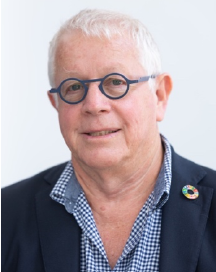
Michael Henry Solomon, (PhD)
STEERING GROUP MEMBERAdjunct Professor
Department of Chemical Engineering
University of Cape Town
Michael Henry Solomon, (PhD)
Professor Solomon is a mining engineer of 45 years of experience in the gold, platinum, diamond and coal sectors. His career has spanned a balance between production mining, consulting and advisory, project development, capital raising and policy development. From a sustainability perspective he specialises on the economic diversification and decarbonisation of mines, but from commodity and investment risk is also knowledgeable on the mining of precursor battery minerals. He has lectured widely on Mining Investment Risk focussing on the supply-side factors of operational risk, host country political risk and geopolitical risk.
Since the political transformation on South Africa commenced in 1990, he has been integrally involved in the development of government policy and was amember of the ANC Minerals and Energy Group drafting team for the post-transition South African Mining Policy from 1992-1994 and seeing that policy into the promulgation of the country’s Mineral and Petroleum Resources Development Act. After the ANC moved to government in 1994 he was a founder member of the policy think tank, the Minerals and Energy Policy Centre (MEPC) where he headed the Minerals Policy team. He was also part of the policy team that framed the Mineral and Petroleum Resources Royalty Act, promulgated in 2008. He has served as the Senior Advisor to the South African Department of Mineral and Petroleum Resources Natoional Mine Closure Strategy from 2019 until 2024.
In South Africa he has served on several governmental and inter-governmental bodies in South Africa and elsewhere. He was the mining expert on the South African Ministerial Water Advisory Committee, the Geosciences Council Advisory Committee, the National Survey Advisory Council and on a number of Judicial and Ministerial Commissions of Enquiry including the mining of mineral sands in environmentally sensitive areas at Richards Bay and around the St Lucia Reserve, the location of the then Iscor Steel Plant at Saldanha Bay, the storage of Iranian Oil at the CEF bunkers at Saldanha Bay and the storage of imported nuclear waste at the Vaalputs Radioactive Waste Disposal Facility in the Northern Cape. He was also a member of a review panel for the South African Presidential Commission for revitalising the South African Mining Industry, Phakisa. He is a member of the Agricultural Economists Association of South Africa (“AESA”) and served on the Steering Committee for the formation of the South African Agricultural Development Agency (“AGDA”) where he chaired the Policy Committee. For the last three years he has been the Senior Advisor to the Council for Geoscience and Department of Minerals and Energy on the National Mine Closure Strategy. He has served on the Board of the United Nations Global Compact in South Africa and is currently a Non-Executive Director of the Federation for a Sustainable Environment.
On international platforms Prof Solomon has served as the UNDP Expert Advisor on the Role of Mining in Poverty Alleviation in Tanzania in 1995 and on the United Nations Economic Commission for Africa (UNECA) Expert Group on Minerals Beneficiation from 2015-2017. In 2015 he served as an expert advisor to the UNECA High Level Dialogue on Accelerating the Rwandan Economy under the auspices of the Rwandan Presidency. He served on the Global Agenda Council for the Future of Mining and Metals of the World Economic Forum from the inception of the Council in 2008 to its dissolution in 2016 and remains a member of the WEF Global Expert Network.
Importantly, Prof Solomon has retained his industry roots as a miner, mine manager and mining engineer. He has served as an Independent Non-Executive Director on the Board of ASX-listed Gold One (the precursor company for Sibanye-Stillwater) where he chaired both the Audit and risk and the Technical Committees. He was Chief Executive of Wesizwe Platinum where took the company from first borehole through listing on the JSE and the raising of full funding for the capital construction of the Bakubung Platinum Mine, which is now in production. He currently serves on the board of Sedibelo Resources Limited, a mid-tier Platinum producer for whom he Chairs the Board Technical Committee and sits on the ESG Committee. He is the founder and Chief Executive of Carbon Neutral Energy Systems (CNES), a company specialising in systems integration in carbon neutrality programmes for mines. He has served as a Member of Council of the of the Southern African Institute of Mining and Metallurgy (SAIMM) for over a decade and he chairs the SAIMM ESGS Committee. In 2022 Prof Solomon was awarded an Honorary Life Fellowship of the SAIMM for his contribution to mining in South Africa. He is an Incoming Vice-President of the SAIMM. He is an Adjunct Professor in the Department of Chemical Engineering at the University of Cape Town where he specialises in the economic diversification and decarbonisation of mines. He is also an Adjunct Professor in the Department of Natural Sciences and Agriculture at the University of the Free State. Notably, Prof Solomon is the chief architect and strategist, convenor and Senior Advisor to His Majesty King Letsie III of Lesotho on the HMKLIII Just Energy Transition Fund which has been set up to transition the country’s economy from a dependence on the remission of mineworkers’ wages to a sustainable economy premised on the sale of green energy to the South African mining sector. He is also the Senior Strategy and Economic Advisor to Kgosi Leruo Molotlegi of the Royal Bafokeng Nation on a Post-Mining Economic Strategy for the Royal Bafokeng Nation. He has recently been awarded the honour of an appointment as the Minister Counselor of the Sovereign Order of Malta to the Kingdom of Lesotho.
Mohamed Aqiel Dalvie, (PhD)
STEERING GROUP MEMBERProfessor and Director
Centre for Environmental and Occupational Health Research
School of Public Health
University of Cape Town
Mohamed Aqiel Dalvie, (PhD)
I am an environmental epidemiologist and currently the director of CEOHR and the SA Research Chair in Global Environmental Health which is a bilateral collaboration with Swiss TPH. My research focuses on the health effects of chemical pollution, more specifically endocrine disrupting chemicals (EDC), especially pesticides and reproductive health of children. My research includes human health risks due to air pollution, water pollution and climate change.
Institutional Affiliation (including department): Centre for Environmental and Occupational Health Research, School of Public Health, UCT
Google Scholar Link (optional): https://scholar.google.com/citations?user=4dCK3YwAAAAJ&hl=en
ORCID ID (optional): orcid.org/0000-0002-2192-0901

Bavisha Koovarjee, (PhD)
Website ManagerPostdoctoral Research Fellow
Department of Environmental and Geographical Sciences
University of Cape Town
Bavisha Koovarjee, (PhD)
Dr. Bavisha Koovarjee is a Postdoctoral Research Fellow at the University of Cape Town, specializing in mine waste management, environmental risk assessment, and GIS applications in geosciences. Her research is inherently interdisciplinary, integrating geological, environmental, and data science methodologies to address critical challenges in mining sustainability. With a Ph.D. in geology focusing on mineralogy, petrology, and geochemistry, her research aims at developing sustainable solutions for the mining sector, particularly in mitigating environmental impacts and repurposing mine waste. Her work contributes to the broader goals of sustainable mining practices, environmental governance, and risk

Itumeleng Ntatamala, (PhD)
STEERING GROUP MEMBEROccupational Medicine Specialist and Senior Lecturer
Division of Occupational Medicine, University of Cape Town
Director: Occupational Medicine clinic at Groote Schuur Hospital
Itumeleng Ntatamala, (PhD)
Dr Itumeleng Ntatamala is an Occupational Medicine specialist and holds a joint appointment as Senior Lecturer in the Division of Occupational Medicine in the School of Public Health as well as Occupational Medicine Consultant in the Department of Medicine at the University of Cape Town (UCT). Dr Ntatamala heads the Occupational Medicine clinic at Groote Schuur Hospital and provides clinical training to registrars in the occupational medicine specialist training programme at UCT. He also convenes the MMed in Occupational Medicine and provides research and supervisory support to students undertaking research at postgraduate level (Masters) in the Occupational Medicine Division and School of Public Health. He is a recipient of the Harry Crossley Clinical Research Fellow. His research has a major focus on health impacts due to mining exposures, occupational health of health workers, biological hazards, and mental health in the workplace. Dr Ntatamala provides technical support and expertise in occupational health policy formulation, occupational health and safety law and worker’s compensation in South Africa at institutional, provincial, and national level. He is currently registered for a PhD in Public Health at the University of Cape Town.
Contact details: Itumeleng.Ntatamala@uct.ac.za
Link: https://health.uct.ac.za/school-public-health/divisions/occupational-medicine
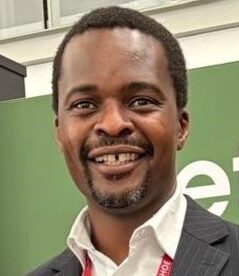
Cledwyn Mangunda, (PhD)
Cledwyn Mangunda is an experienced chemical engineer with a passion for developing sustainable minerals value and supply chain. His 19-year career has spanned managerial roles in food processing, metal and timber processing industries, and academia. His research interests are in mine dust mitigation and control, mining stakeholder engagement, and hydrometallurgical processes with a focus on waste treatment and valorisation. He currently serves on the advisory board of two higher education institutions within Southern Africa and is the programme co-convener of the Leaders in Extractives and African Development (LEAD) Programme and coordinator for the GCRF Mine Dust and Health Network.
- Contact and professional links:

Robert Bryant, (PhD)
AssociateSenior Lecturer and Reader in Earth Observation.
University of Sheffield
Robert Bryant, (PhD)
I initially trained as an Earth Scientist with a BSc (hons) in Geology, followed by a PhD at PRIS/Department of Geography, University of Reading, investigating the “sedimentology and hydrochemistry of the Chott el Djerid, Tunisia using remote sensing” – which allowed me to enter the world of Earth Observation. Post-PhD I worked a Research Assistant at Reading working on the pre-processing of AVHRR data (as partt of the TREES project), and then spent a summer in Iceland working on a project focused on monitoring aeolian processes. I then gained Postdoctoral Fellowhip and Lectureship positions in Environmental Sciences at the University of Stirling where my research broadened into the use of airborne remote sensing and field spectroradiometry. I then moved to a Lecturership in Applied Remote Sensing at Sheffield – and in doing so returned to researching dryland systems and processes. I have now been at Sheffield for over 25 years, and in that time have promoted to Senior Lecturer and Reader in Earth Observation.
As an Earth Observation Scientist, i’m interested in Landscape Dynamics and Earth/Atmosphere interactions. I’m particularly interested in the global dust cycle – with emphasis on the impacts that geomorphological, hydrological and ecological processes have on dust fluxes and Sand & Dust Storms across the globe. My research has included the first regional and continental scale mapping and characterisation of dust sources and emission using EO. In addition, i’ve championed and demonstrated the use of EO data (including near and far surface approaches) as applied to a range of dynamic land surface domains and biomes/ecotones (e.g. rivers, wetlands, coasts, tropical forests, and where they interact) as well as land/atmosphere fluxes from these (e.g. fire, flooding), and aspects of spatial ecology/conservation. I’ve received funding from ESA, UKRI, Leverhulme and other funding agencies

Giles Wiggs, (PhD)
STEERING GROUP MEMBER+44 (0)1865 275998
Prof Giles Wiggs is a desert geomorphologist at University of Oxford, UK, specialising in the physical processes controlling how dust is transported by the wind (aeolian sediment transport), including using modelling to determine the role of vegetation, moisture, topography and human activity in the mobilisation of dust.
Giles Wiggs, (PhD)
Professor Giles Wiggs is a desert geomorphologist at University of Oxford, UK, specialising in the physical processes controlling how dust is transported by the wind (aeolian sediment transport), including using modelling to determine the role of vegetation, moisture, topography and human activity in the mobilisation of dust. His projects span Africa, Central Asia, Middle East and Australia and he has led international research teams funded by the Natural Environment Research Council (UK), South African National Science Foundation, Medecins sans Frontieres and the British Council. He has made great effort to determine the relative importance of atmospheric and terrestrial controls on dust and the impact of dust on respiratory health. Prof Wiggs will bring considerable experience and expertise to the network on several research areas, including source identification, monitoring and measurement, practices of dust control and mitigation and impacts on community health.

Jewette Masinja, (PhD)
Steering Group MemberDr Jewette Masinja is a senior lecturer at the School of Mines, University of Zambia (UNZA). He has held positions within the Zambian mining industry and government and was responsible for preparing current regulations governing environmental protection in the mining sector in Zambia
Jewette Masinja, (PhD)
Dr Jewette Masinja is a senior lecturer at the School of Mines, University of Zambia (UNZA). He has held positions within the Zambian mining industry and government and was responsible for preparing current regulations governing environmental protection in the mining sector in Zambia. He continues to consult to the national Zambian government, and industry in both Namibia and Zambia, on environmental management policy, legislation and practice in the context of mining. With this cross-cutting experience, Dr Masinja will bring a broad range of perspectives on the pollution impacts, management and governance of mine dust to this Network. He is also in a strong position to help to expand the network, to provide student mentoring; and to participate in further collaborative funding applications and programmes.