

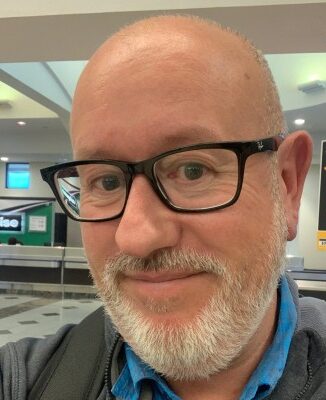
I initially trained as an Earth Scientist with a BSc (hons) in Geology, followed by a PhD at PRIS/Department of Geography, University of Reading, investigating the “sedimentology and hydrochemistry of the Chott el Djerid, Tunisia using remote sensing” – which allowed me to enter the world of Earth Observation. Post-PhD I worked a Research Assistant at Reading working on the pre-processing of AVHRR data (as partt of the TREES project), and then spent a summer in Iceland working on a project focused on monitoring aeolian processes. I then gained Postdoctoral Fellowhip and Lectureship positions in Environmental Sciences at the University of Stirling where my research broadened into the use of airborne remote sensing and field spectroradiometry. I then moved to a Lecturership in Applied Remote Sensing at Sheffield – and in doing so returned to researching dryland systems and processes. I have now been at Sheffield for over 25 years, and in that time have promoted to Senior Lecturer and Reader in Earth Observation.
As an Earth Observation Scientist, i’m interested in Landscape Dynamics and Earth/Atmosphere interactions. I’m particularly interested in the global dust cycle – with emphasis on the impacts that geomorphological, hydrological and ecological processes have on dust fluxes and Sand & Dust Storms across the globe. My research has included the first regional and continental scale mapping and characterisation of dust sources and emission using EO. In addition, i’ve championed and demonstrated the use of EO data (including near and far surface approaches) as applied to a range of dynamic land surface domains and biomes/ecotones (e.g. rivers, wetlands, coasts, tropical forests, and where they interact) as well as land/atmosphere fluxes from these (e.g. fire, flooding), and aspects of spatial ecology/conservation. I’ve received funding from ESA, UKRI, Leverhulme and other funding agencies